


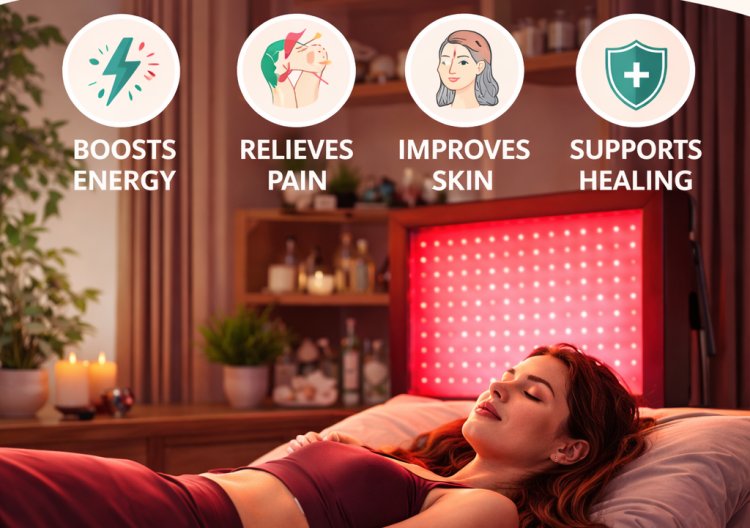
Introduction: Light is More Than What You See
For most of us, light is something we associate with vision. But biologically, light is far more powerful—it is information.
Every cell in your body has the ability to sense and respond to light. This means light is not just something we see; it is something your body uses to regulate, repair, and heal at a cellular level.
At Tula Wellness Hub, we believe in activating the body’s innate intelligence—and light is one of the most fundamental tools to do that.
The Science: How Red Light Therapy Works
1. The Mitochondria Connection (Your Energy Engine)
At the core of cellular healing lies the mitochondria—the energy generators of your cells.
Red and near-infrared light interact with an important enzyme called cytochrome c oxidase, which directly enhances the production of ATP (your body’s energy currency).
When energy improves:
- Cellular repair improves
- Tissue regeneration accelerates
- Overall resilience increases
This is why red light therapy is often referred to as “mitochondrial medicine.”
2. Light as a Cellular Signal
Red light doesn’t just boost energy—it acts as a biological signal.
It helps:
- Regulate reactive oxygen species (ROS)
- Activate antioxidant defenses
- Reduce chronic inflammation
This allows the body to shift from a stress state → healing state.
Benefits of Red Light Therapy
Improved Circulation & Oxygenation
Red light therapy stimulates the release of nitric oxide, improving blood flow and oxygen delivery to tissues.
Pain Relief & Muscle Recovery
- Reduces inflammation
- Speeds up recovery
- Improves flexibility
Especially useful for:
- Chronic pain
- Post-exercise recovery
- Joint stiffness
Better Sleep & Hormonal Balance
Light plays a key role in regulating circadian rhythms.
Red light therapy can:
- Improve sleep quality
- Support melatonin balance
- Enhance recovery cycles
Brain Health & Mental Clarity
By reducing neuroinflammation and improving neuronal energy, it supports:
- Focus
- Mental clarity
- Emotional balance
Skin Health & Anti-Aging
- Boosts collagen production
- Improves skin tone and texture
- Helps with acne and pigmentation
Immune System Support
Red light therapy helps modulate (not overstimulate) the immune system, improving resilience and reducing chronic inflammation.
The Modern Problem: We Are Light-Deprived
Today’s lifestyle has drastically reduced our exposure to natural healing light:
- Indoor living
- Excess screen exposure
- Artificial lighting
This leads to:
- Poor sleep
- Hormonal imbalance
- Reduced cellular repair
In simple terms—our cells are underexposed to the light they need to function optimally.
Red Light Therapy at Tula Wellness Hub
At Tula, we integrate Red Light Therapy as part of a holistic healing approach.
This non-invasive therapy:
- Works at a cellular level
- Enhances mitochondrial function
- Supports full-body healing
It is particularly beneficial for:
- Chronic inflammation
- Fatigue
- Slow recovery
- Skin concerns (aging, acne, pigmentation)
- Stress and burnout
Many patients also report:
- Better sleep
- Improved mood
- Increased energy
Why Choose Red Light Therapy in Coimbatore at Tula?
✔ Integrative + Functional Medicine approach
✔ Focus on root cause healing
✔ Combination with therapies like:
- IV Nutrition
- HBOT (Hyperbaric Oxygen Therapy)
- Infrared Sauna
✔ Personalized protocols based on your health goals
Final Thoughts: Light as Medicine
“Light your cells, heal faster, glow deeper, feel better.”
Light is not just energy—it is communication. Your cells are constantly listening.
When used correctly, light:
- Restores cellular clarity
- Reduces inflammation
- Enhances natural healing
Sometimes healing is not about doing more—
it’s about reconnecting with the most fundamental signals of life.
And light is one of the most powerful among them.
Looking for Red Light Therapy in Coimbatore?
Experience advanced cellular healing at Tula Wellness Hub.
Book your session today
www.tulahealth.in
+91 70300 70400







Dr. Priya Vasudevan M.D, AB. Dip ABLM