


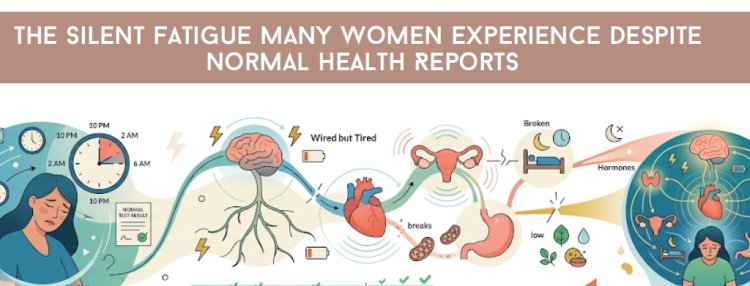
Fatigue has quietly become one of the most common health concerns among women today. Many women wake up tired, move through the day with low energy, depend on caffeine to function, and still feel exhausted despite getting “enough sleep.”
What makes this even more frustrating is that routine blood tests often come back completely normal.
So the question becomes:
If the reports are normal, why does the body still feel depleted?
The answer is that energy levels are influenced by much more than a few laboratory numbers.
Standard investigations are excellent at detecting major disease or severe deficiencies. But they do not always reflect how efficiently the body is functioning on a daily basis.
Stress, poor recovery, inflammation, hormonal fluctuations, nutrient insufficiency, emotional overload, and nervous system exhaustion can all affect energy levels long before abnormalities appear in routine tests.
For many women, fatigue is not caused by one single issue. Instead, it develops gradually through the combined effects of chronic stress and modern lifestyle demands.
Normal vs Optimal Health
A laboratory report being “normal” does not necessarily mean the body is functioning optimally.
Many women fall within standard reference ranges while still experiencing symptoms such as:
• Brain fog
• Low stamina
• Poor sleep
• Irritability
• Difficulty concentrating
• Constant tiredness
The body works as an interconnected system.
Energy production depends on healthy communication between hormones, the nervous system, mitochondria, digestion, immunity, sleep cycles, and mental health.
Even small imbalances across several of these systems can slowly reduce vitality over time.
For example, a woman may technically not be anaemic but may still have iron stores that are less than ideal for optimal energy production.
Similarly, chronic stress or poor-quality sleep may severely affect recovery while routine blood tests continue to appear normal.
This is why many women feel unheard when their symptoms are dismissed solely because their reports look “fine.”
The Hidden Impact of Chronic Stress
One of the biggest contributors to unexplained fatigue is prolonged stress.
Modern women often juggle multiple responsibilities simultaneously:
• Careers
• Caregiving
• Family management
• Emotional labour
• Financial pressures
• Constant digital stimulation
Over time, the body can remain stuck in a persistent “fight or flight” state, where stress hormones stay elevated for long periods.
Initially, the body compensates well.
But eventually, chronic stress begins affecting sleep, digestion, concentration, muscle recovery, mood, and immune balance.
Many women describe this phase as burnout, emotional exhaustion, or feeling “wired but tired.”
The nervous system becomes overstimulated while the body simultaneously feels depleted.
This type of fatigue is very real — even if it cannot always be measured directly through standard investigations.
Poor Recovery Is Often Mistaken for Laziness
Many women believe they simply need to “push harder.”
But often, the body is actually asking for recovery.
A person may sleep for eight hours yet still wake up exhausted if sleep quality is poor.
Factors that can interfere with deep restorative sleep include:
• Stress
• Excessive screen time
• Hormonal shifts
• Irregular sleep schedules
• Shallow breathing
• Blood sugar fluctuations
Without proper recovery, the brain and body struggle to repair tissues, regulate hormones, support immunity, and restore mental clarity.
Over time, this creates cumulative fatigue that affects productivity, mood, metabolism, and resilience.
The body is not designed to function continuously without adequate recovery periods.
Hormonal Changes Affect More Than Reproductive Health
Hormones influence energy, mood, sleep, appetite, metabolism, and pain perception.
Even small hormonal fluctuations can therefore have a surprisingly large impact on how a woman feels.
Fatigue may become more noticeable:
• Before menstrual cycles
• During perimenopause
• After childbirth
• During breastfeeding
• During emotionally stressful periods
Some women also experience fatigue alongside irregular cycles, PMS symptoms, headaches, water retention, and poor sleep.
Importantly, symptoms can appear even before major hormonal abnormalities become obvious on laboratory testing.
Nutrient Intake May Be Insufficient Despite Eating Regularly
Modern diets often provide enough calories but not enough nourishment.
Busy schedules, processed foods, meal skipping, crash dieting, low protein intake, digestive issues, stress, and poor absorption can gradually reduce nutrient reserves required for cellular energy production.
The body may continue functioning while silently compensating for these deficiencies — until fatigue eventually becomes noticeable.
Inflammation Can Quietly Drain Energy
Chronic stress and low-grade inflammation can slowly drain the body’s energy reserves.
When the immune system remains activated for long periods, the body uses more nutrients and antioxidants for repair and recovery.
This may contribute to:
• Body aches
• Poor concentration
• Disturbed sleep
• Brain fog
• Persistent fatigue
Poor gut health, processed foods, stress, food sensitivities, sedentary lifestyle, and autoimmune tendencies may all increase inflammatory load within the body.
Fatigue is often not just about low calories, but also about reduced cellular nourishment and recovery.
Supporting Energy Naturally
Sustainable energy comes from improving recovery — not simply stimulating the body temporarily.
Simple lifestyle measures can gradually improve vitality and resilience:
• Better sleep quality
• Adequate protein intake
• Hydration
• Stress management
• Gentle movement
• Reducing processed foods
Some women may also benefit from nutritional support, yoga, breathwork, relaxation therapies, or medically supervised wellness support.
The goal is not to force the body to keep going endlessly, but to help it recover and function more efficiently.
Dr. Priya’s Insight
Feeling exhausted despite normal blood work is more common than many women realize.
Standard laboratory tests may not always capture the full picture of stress, recovery, inflammation, hormonal balance, or nervous system health.
Fatigue should not always be ignored simply because reports appear normal.
Often, the body is signaling that it needs restoration, nourishment, and better recovery support before deeper dysfunction develops.
True wellness is not defined only by the absence of disease on a report.
It is reflected in how a person feels, functions, sleeps, recovers, and experiences daily life.
When the body receives consistent support, energy often returns gradually — not through pushing harder, but through restoring balance.





Dr. Priya Vasudevan M.D, AB. Dip ABLM