


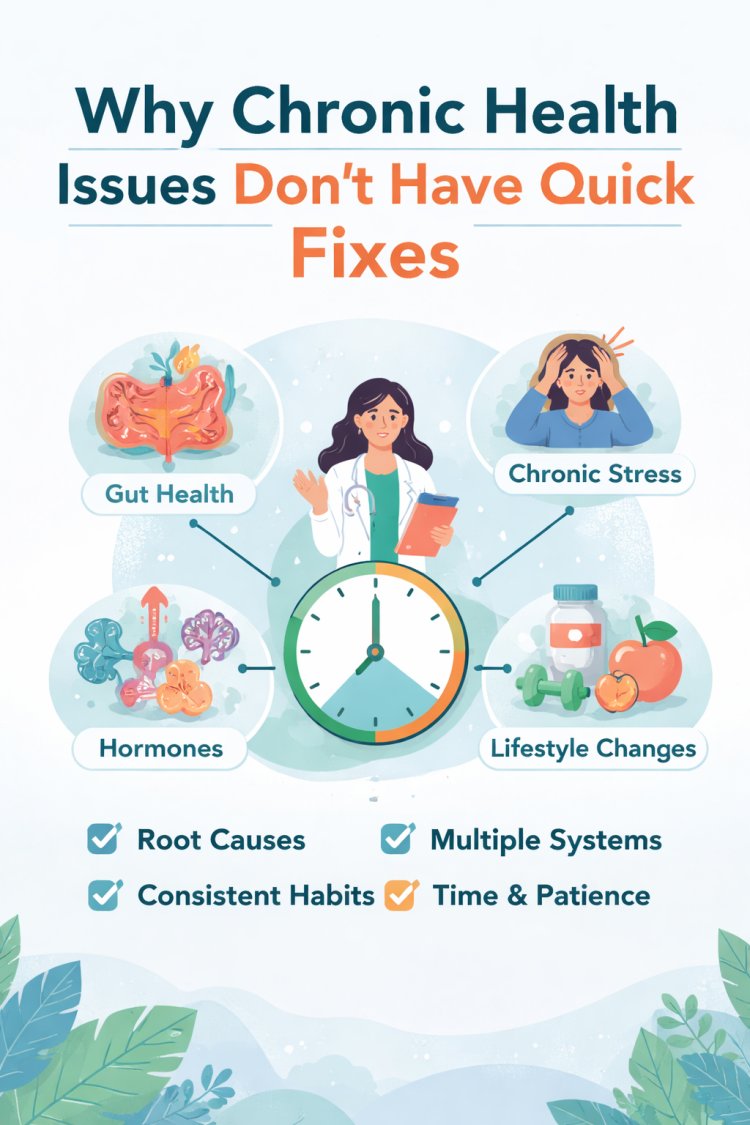
In today’s fast-paced world, there is an increasing expectation that every health problem should have an immediate solution. From instant food to rapid fitness transformations, this mindset has extended into healthcare. Many people believe that chronic conditions—such as gut disorders, hormonal imbalances, autoimmune diseases, and chronic fatigue—can be resolved quickly with a pill, supplement, or short-term diet.
However, this approach often leads to frustration because chronic health issues do not have quick fixes. Understanding the science behind healing helps set realistic expectations and leads to sustainable, long-term results.
Why Chronic Illness Develops Slowly
Chronic diseases do not appear overnight. They are the result of a gradual accumulation of stressors, including:
- Poor dietary habits
- Irregular sleep patterns
- Chronic emotional stress
- Environmental toxins
- Infections
- Long-term medication use
The body adapts silently to these stressors over time. By the time symptoms appear, the imbalance has often been present for months—or even years.
???? Expecting rapid recovery from a long-standing issue is like trying to undo years of damage in a few days.
Chronic Conditions Involve Multiple Systems
One of the biggest reasons quick fixes fail is that chronic illnesses rarely affect just one system.
They typically involve interconnected systems such as:
- Gut health
- Immune system
- Hormonal (endocrine) balance
- Nervous system
For example, gut inflammation can trigger immune dysregulation, hormonal imbalance, and even mood disturbances.
Treating only symptoms—like acidity or bloating—may provide temporary relief, but it does not address the root cause.
✔️ True healing requires a systems-based approach, not symptom-based treatment.
The Role of Nervous System Dysregulation
A critical yet often overlooked factor in chronic illness is the nervous system.
Many individuals live in a state of chronic stress (fight-or-flight mode), which impacts:
- Sleep quality
- Digestion
- Hormonal balance
- Immune function
Even with the right diet or supplements, healing may stall if the body does not shift into a parasympathetic (rest-and-digest) state.
This shift requires consistent practices such as:
- Breathwork
- Mindfulness
- Structured routines
- Stress reduction techniques
Why Medications Alone Are Not Enough
Medications can be lifesaving and necessary, but they also have complex effects on the body.
Long-term use may impact:
- Nutrient levels
- Sleep cycles
- Hormonal rhythms
- Metabolism
For example, certain medications can disrupt cortisol patterns and increase metabolic stress. Even after stopping or adjusting them, the body needs time to recalibrate.
Cellular Healing Takes Time
At a deeper level, chronic illness involves changes at the cellular level.
Healing requires:
- Replenishing nutrient stores
- Repairing tissues
- Restoring mitochondrial function
- Rebalancing cellular signaling
These are biological processes that cannot be rushed.
Healing Is Not Linear
One of the most misunderstood aspects of recovery is that healing is not a straight line.
Patients may experience:
- Periods of improvement
- Plateaus
- Temporary setbacks
These fluctuations are part of the body’s natural adjustment process—not signs of failure.
Lifestyle Changes Require Consistency
Chronic health issues are deeply connected to daily habits.
True healing requires long-term changes in:
- Nutrition
- Sleep
- Stress management
- Physical activity
These cannot be fixed with a short-term intervention. Instead, they require:
✔️ Awareness
✔️ Consistency
✔️ Repetition
Why Inconsistency Slows Down Healing
Many people jump from one diet, supplement, or treatment to another in search of faster results.
This creates confusion for the body and prevents adaptation.
???? A simple, consistent plan is often more effective than constantly changing strategies.
Symptoms Are Signals, Not Just Problems
Symptoms are not just issues to suppress—they are signals from the body.
For example:
- Digestive issues → Gut inflammation
- Fatigue → Hormonal or metabolic imbalance
- Sleep disturbances → Nervous system dysregulation
Suppressing symptoms without addressing the root cause may delay true healing.
The Body Prioritizes Survival First
When under chronic stress, the body focuses on survival rather than optimal function.
Healing typically follows this order:
- Improve sleep
- Restore digestion
- Reduce inflammation
- Then address deeper issues like hormones and metabolism
Skipping these steps often leads to incomplete recovery.
The Truth About Sustainable Healing
Chronic health issues require a shift in mindset:
❌ “How quickly can I fix this?”
✔️ “How consistently can I support my body?”
Quick fixes often:
- Mask symptoms
- Provide temporary relief
- Delay root-cause healing
True healing is built on:
- Consistency
- Stability
- Addressing root causes
- Supporting multiple systems simultaneously
Final Thoughts
The human body has an incredible capacity to heal—but it does so on its own timeline.
When you work with your body instead of against it, long-term recovery becomes not only possible but sustainable.
The goal is not rapid results.
The goal is lasting balance, resilience, and true health.







Dr. Priya Vasudevan M.D, AB. Dip ABLM