


When we think about our body's structure, we usually think of muscles, bones, joints, and organs. However, there is another remarkable system that often goes unnoticed despite playing a critical role in movement, flexibility, pain, posture, and overall health. This system is called fascia.
For many years, fascia was viewed simply as a wrapping around muscles and organs. Today, researchers and healthcare professionals recognize fascia as a dynamic, body-wide network that influences nearly every aspect of physical function. Some experts even refer to fascia as the body's "forgotten organ."
Understanding fascia can provide valuable insights into chronic pain, stiffness, injury recovery, mobility, athletic performance, and overall wellness.
What Is Fascia?
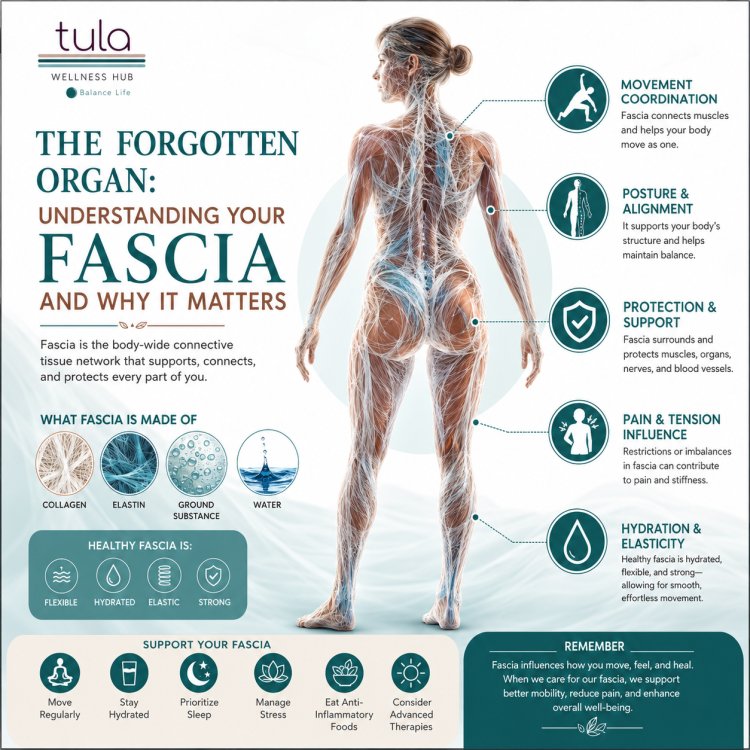
Fascia is a continuous web of connective tissue that surrounds and supports muscles, bones, nerves, blood vessels, and organs throughout the body.
Imagine a three-dimensional spider web running from head to toe. This web connects every structure in your body, creating a unified system that helps distribute force, maintain posture, and facilitate movement.
Fascia is primarily composed of:
- Collagen
- Elastin
- Ground substance
- Water
Together, these components create a tissue that is both strong and flexible.
Healthy fascia is:
- Flexible
- Hydrated
- Elastic
- Strong
When fascia functions properly, movement feels smooth and effortless. When fascia becomes restricted, dehydrated, or inflamed, discomfort and dysfunction can develop.
Why Fascia Is So Important
Structural Support
Fascia helps maintain body alignment and posture. It supports muscles and organs while allowing them to move efficiently.
Without fascia, the body's structures would lose much of their organization and stability.
Movement Coordination
For many years, movement was thought to be controlled primarily by individual muscles.
We now understand that fascia helps coordinate movement across the entire body.
This explains why tightness in one area can affect distant regions. A restriction in the foot may influence the knee. A problem in the hips may contribute to lower back discomfort.
The body functions as an interconnected whole.
Force Transmission
When you walk, run, lift weights, stretch, or climb stairs, fascia distributes forces throughout the body.
Rather than muscles working in isolation, fascial tissues help transfer energy across multiple movement chains, improving efficiency and reducing strain on individual structures.
Sensory Function
One of the most fascinating discoveries about fascia is its rich nerve supply.
Fascia contains numerous sensory receptors that help the brain understand:
- Body position
- Movement
- Balance
- Tension
- Pressure
Because fascia is richly innervated, restrictions within fascial tissues may contribute significantly to pain and discomfort.
The Emerging Link Between Fascia and Chronic Pain
Many people experience chronic pain despite normal scans and imaging studies.
Increasingly, researchers are exploring whether fascial dysfunction may play a role.
When fascia loses its ability to glide smoothly, tissues can become stiff and restricted. These restrictions may create abnormal tension patterns throughout the body.
Potential consequences include:
- Neck pain
- Back pain
- Shoulder tightness
- Reduced flexibility
- Recurrent injuries
- Muscle soreness
- Movement limitations
Many individuals living with chronic pain conditions, including fibromyalgia, often demonstrate widespread fascial restrictions that may contribute to their symptoms.
While fascia may not be the only factor involved, it is becoming an increasingly important part of the conversation around pain and mobility.
How Fascia Becomes Dysfunctional
Modern lifestyles place considerable stress on the fascial system.
Prolonged Sitting
Hours spent sitting at desks, driving, or using electronic devices can cause fascia to adapt to shortened positions.
Over time, this may contribute to stiffness and reduced mobility.
Lack of Movement
Movement helps maintain fascial hydration and elasticity.
A sedentary lifestyle can cause tissues to become less adaptable and more restricted.
Injury and Trauma
Accidents, surgeries, repetitive strain, and sports injuries may create fascial adhesions and restrictions.
Even after the original injury heals, fascial changes may persist.
Chronic Stress
Emotional stress often manifests physically through increased muscle tension.
Over time, these tension patterns may influence surrounding fascial tissues.
Dehydration
Fascia relies on adequate hydration to maintain its smooth gliding properties.
Insufficient water intake may contribute to stiffness and reduced tissue mobility.
Signs Your Fascia May Need Attention
Fascial dysfunction can present in many different ways.
Common signs include:
- Persistent stiffness
- Limited range of motion
- Chronic neck pain
- Chronic back pain
- Muscle tightness that does not improve with stretching
- Recurrent injuries
- Poor posture
- Generalized body aches
- Reduced flexibility
- Delayed recovery after exercise
Many people assume these symptoms are simply a normal part of aging. In reality, they may indicate that the fascial system requires support.
Fascia and Aging
As we age, connective tissues naturally undergo changes.
Collagen production slows.
Hydration levels decrease.
Tissue elasticity declines.
These changes may contribute to:
- Reduced flexibility
- Slower recovery
- Increased stiffness
- Higher injury risk
This is one reason why movement becomes increasingly important with age.
Regular activity helps stimulate tissue remodeling and maintain healthy mobility.
The good news is that fascia remains adaptable throughout life.
With proper care, even older adults can improve movement quality and flexibility.
Supporting Fascia Through Lifestyle
Fortunately, fascia responds positively to healthy lifestyle practices.
Move Frequently
Regular movement is one of the most effective ways to maintain fascial health.
Helpful activities include:
- Walking
- Yoga
- Stretching
- Mobility exercises
- Strength training
- Swimming
Movement encourages tissue hydration and remodeling.
Stay Hydrated
Water is a critical component of healthy fascial tissue.
Aim for consistent hydration throughout the day rather than consuming large amounts at once.
Prioritize Sleep
During sleep, the body repairs tissues and supports recovery processes that influence fascial health.
Poor sleep can impair recovery and contribute to increased pain sensitivity.
Manage Stress
Mindfulness practices, meditation, breathing exercises, prayer, and relaxation techniques can help reduce excessive tension patterns throughout the body.
Eat an Anti-Inflammatory Diet
Whole foods rich in antioxidants, vitamins, minerals, and healthy fats support connective tissue health.
Focus on:
- Vegetables
- Fruits
- Nuts and seeds
- Quality protein
- Healthy fats
- Adequate hydration
What About Foam Rolling and Myofascial Release?
Many people use foam rollers to improve flexibility and reduce stiffness.
While foam rolling may not physically "break up" fascia as commonly believed, it may help:
- Improve tissue hydration
- Reduce discomfort
- Enhance mobility
- Improve movement quality
Similarly, massage and myofascial release therapies may provide temporary improvements in tissue mobility and comfort.
These approaches work best when combined with regular movement and healthy lifestyle habits.
Advanced Therapies That May Support Fascial Health
In addition to lifestyle interventions, certain therapies may help support recovery and tissue health.
Red Light Therapy
Red light therapy uses specific wavelengths of light that may support cellular energy production and tissue repair.
Potential benefits include:
- Improved circulation
- Enhanced recovery
- Reduced muscle soreness
- Support for connective tissue healing
Infrared Sauna Therapy
Infrared sauna gently increases tissue temperature and promotes circulation.
Potential benefits include:
- Improved blood flow
- Relaxation of tight muscles
- Temporary reduction in stiffness
- Support for stress management
Hyperbaric Oxygen Therapy (HBOT)
HBOT involves breathing oxygen in a pressurized environment, increasing oxygen delivery throughout the body.
Potential benefits include:
- Enhanced tissue oxygenation
- Support for recovery processes
- Improved wound healing
- Support for cellular function
Ozone Therapy
Ozone therapy is used in various integrative healthcare settings to support physiological function and recovery.
Potential benefits may include:
- Improved oxygen utilization
- Support for circulation
- Support for recovery mechanisms
- Enhancement of overall cellular resilience
Dr. Priya's Insight
One of the most fascinating aspects of fascia is that it reminds us that the body functions as an integrated whole.
A restriction in the foot may influence the knee. A problem in the hips may affect the lower back. Chronic stress may contribute to neck tension.
Everything is interconnected.
At Tula Wellness Hub, we believe lasting wellness comes from understanding these connections. Rather than focusing only on symptoms, we look at movement, recovery, stress, sleep, nutrition, and lifestyle as part of one interconnected system.
By supporting fascia through movement, hydration, proper nutrition, stress management, and evidence-informed therapies, we can help improve mobility, comfort, recovery, and overall quality of life.
Frequently Asked Questions
What is fascia?
Fascia is a body-wide network of connective tissue that surrounds and supports muscles, bones, nerves, blood vessels, and organs.
Can fascia cause pain?
Restricted or inflamed fascia may contribute to pain, stiffness, reduced mobility, and discomfort.
Does dehydration affect fascia?
Yes. Fascia relies heavily on water to maintain its flexibility and smooth gliding properties.
Is stretching enough to keep fascia healthy?
Stretching helps, but fascia also benefits from strength training, walking, mobility exercises, hydration, sleep, and stress management.
Can fascia improve with age?
Yes. Fascia remains adaptable throughout life and often responds positively to movement, hydration, and healthy lifestyle habits.
Key Takeaway
Fascia may be one of the most overlooked systems in the human body, yet it influences how we move, recover, feel, and function every day.
Supporting fascia does not require complicated treatments. Consistent movement, hydration, quality sleep, stress management, and proper nutrition can all contribute to healthier connective tissue and better overall wellbeing.
By caring for your fascia, you are investing in better movement, better recovery, and a healthier future.









Dr. Priya Vasudevan M.D, AB. Dip ABLM