


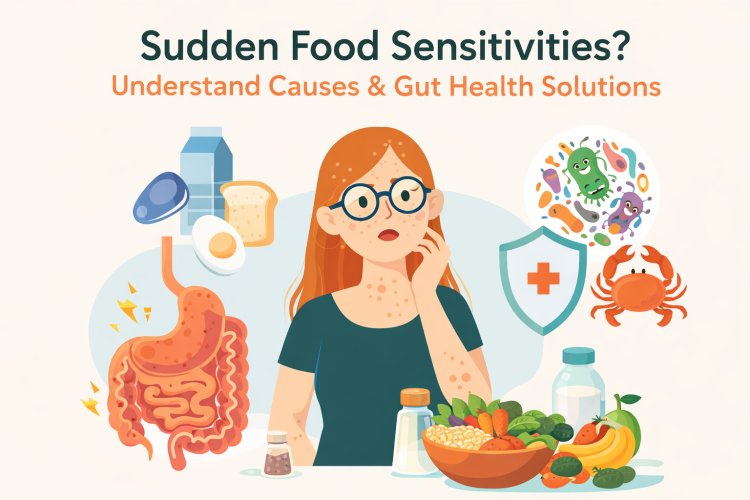
Introduction: Why Am I Suddenly Reacting to Foods I Always Ate?
It’s a common and frustrating experience—foods you’ve eaten for years suddenly start causing bloating, skin issues, fatigue, or sinus congestion.
This isn’t random.
Your body is dynamic. Changes in gut health, digestion, immune balance, and lifestyle can alter how your body responds to food over time.
Food Allergy vs Food Sensitivity: Know the Difference
Understanding this distinction is critical:
Food Allergy
- Immediate immune reaction (IgE-mediated)
- Symptoms: hives, swelling, breathing difficulty
- Can be life-threatening
Food Sensitivity / Intolerance
- Delayed reaction
- Symptoms: bloating, fatigue, headaches, skin issues
- More common in adults
Most “sudden reactions” are sensitivities—not true allergies.
Why Do Sudden Food Sensitivities Develop? (Root Causes)
1. Gut Barrier Dysfunction (“Leaky Gut”)
Your intestinal lining acts as a protective barrier. When compromised, undigested food particles enter circulation and trigger immune responses.
2. Poor Digestion
Low stomach acid, enzyme deficiencies, and stress can impair digestion—leading to incomplete breakdown of food and increased reactivity.
3. Repetitive Eating Patterns
Eating the same foods daily (milk, wheat, eggs) increases immune exposure and can trigger sensitivities over time.
4. Gut Microbiome Imbalance
An unhealthy microbiome promotes inflammation and reduces your body’s ability to tolerate foods.
5. Lifestyle & Environmental Factors
- Chronic stress
- Poor sleep
- Pollution
- Chemical exposure
These shift your immune system toward hypersensitivity.
6. Underlying Health Conditions
Autoimmune conditions, infections, and hormonal imbalances can lower your tolerance threshold.
Why Food Diversity is the Missing Link
One of the biggest overlooked causes?
Monotonous “healthy” diets
Benefits of Food Diversity:
- Prevents immune overexposure
- Improves gut microbiome diversity
- Enhances nutrient intake
- Maintains long-term food tolerance
The Vicious Cycle Most Patients Fall Into
Many people unknowingly enter this loop:
Limited diet → Symptoms → More restriction → Increased sensitivity
This leads to:
- Fear of food
- Nutritional deficiencies
- Worsening gut health
Breaking this cycle is key.
How to Reverse Food Sensitivities Naturally (Functional Medicine Approach)
1. Rotate Your Foods
Avoid eating the same food daily. Rotate proteins and grains every 2–3 days.
2. Increase Dietary Diversity
Include:
- Seasonal vegetables
- Different grains
- Nuts & seeds
3. Heal the Gut
Focus on:
- Fiber-rich foods
- Hydration
- Fermented foods (if tolerated)
4. Improve Digestion
- Eat slowly
- Reduce stress while eating
- Support stomach acid & enzymes when needed
5. Identify Patterns (Not Just Foods)
Look at:
- Frequency
- Quantity
- Combinations
Often it’s not the food—it’s the pattern of eating.
When to Seek Immediate Medical Help
Watch for:
- Difficulty breathing
- Swelling of lips/tongue
- Severe hives
- Dizziness or drop in BP
These may indicate true food allergy (anaphylaxis) and require urgent care.
Key Takeaways
- Sudden food sensitivities are not random
- Gut health is central to food tolerance
- Repetitive diets increase risk
- Diversity is medicine
True healing is not about avoiding more foods—it’s about building resilience.
Final Thought
A healthy body is not one that reacts to everything—it’s one that can adapt to variety with ease.
At Tula, we focus on restoring that resilience—through gut healing, functional nutrition, and personalized care.





Dr. Priya Vasudevan M.D, AB. Dip ABLM