


Acupuncture:
Ancient Needles, Modern Neuroscience
How it works, what the evidence says, and the conditions it can support
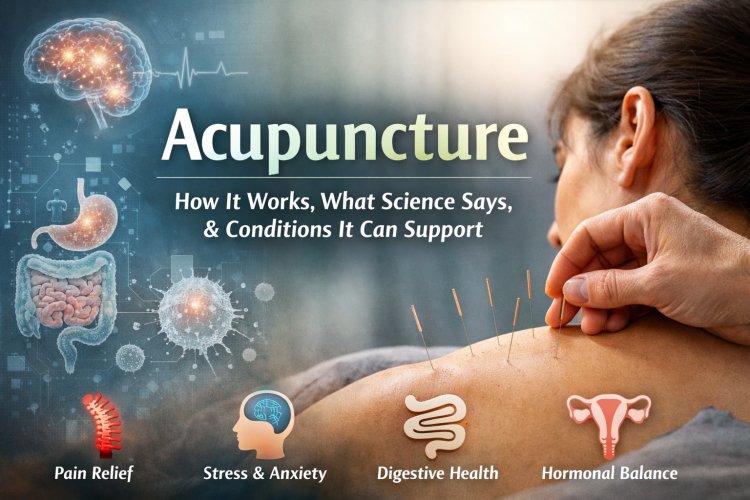
Acupuncture is one of the most studied traditional therapies in integrative medicine today. At its core, it involves inserting very fine, sterile needles into specific points on the body to influence pain pathways, nervous-system balance, and inflammation. While its roots come from Traditional Chinese Medicine, modern research increasingly explains acupuncture in the language of physiology: neuromodulation, connective-tissue signaling, local immune effects, and brain–body communication. NCCIH
What I love about acupuncture is that it sits beautifully at the intersection of “felt experience” (patients often feel calmer immediately) and measurable outcomes (changes in pain, function, sleep, and quality of life in many studies). That doesn’t mean it’s a cure-all—but it can be a valuable part of a comprehensive plan when used thoughtfully.
What Happens in the Body During Acupuncture?
1) Pain modulation: “Turning down the volume”
The best-supported use of acupuncture is pain management, especially chronic pain. Mechanistically, acupuncture can stimulate nerve fibers in skin and muscle, which then influence the spinal cord and brain’s pain-processing circuits. This can increase the release of the body’s own pain-relieving chemicals (like endorphins) and shift the way pain signals are interpreted.
Clinical guidelines reflect this: the American College of Physicians recommends non-drug options—including acupuncture—for acute, subacute, and chronic non-radicular low back pain. acponline.org+1
2) Nervous system regulation: sympathetic vs. parasympathetic balance
Many patients notice improved sleep, calmer digestion, and reduced tension. A modern framing is that acupuncture can help rebalance the autonomic nervous system—reducing “fight or flight” activation and supporting “rest and digest.” This matters because chronic stress physiology can amplify pain, worsen gut symptoms, disrupt hormones, and fragment sleep.
3) Local tissue effects: circulation + inflammation signaling
Needle insertion creates a tiny local stimulus that can influence microcirculation and local inflammatory mediators. In practical terms, this can help reduce muscle guarding, myofascial trigger points, and certain inflammatory pain patterns.
What Does the Scientific Evidence Say?
Let’s be clear and honest: acupuncture research is complex. Designing a “placebo” for acupuncture is difficult, because even shallow needling or non-penetrating “sham” devices can still produce physiological effects. Despite that, the body of evidence is strong enough in key areas that major medical organizations include acupuncture as a legitimate option—especially for pain conditions. NCCIH+1
Here’s where evidence is most consistently supportive:
Chronic musculoskeletal pain
Acupuncture has evidence for benefit in several chronic pain conditions (with variable effect size), and it’s generally considered safe when performed by trained practitioners using sterile needles. NCCIH+1
Migraine prevention
A Cochrane review found acupuncture can reduce migraine frequency and may perform as well as (or slightly better than) preventive medications in some comparisons, with fewer side effects—though results vary by study and follow-up period. Cochrane
Chronic pain conditions like fibromyalgia
Evidence summaries from NCCIH note low-to-moderate quality evidence supporting acupuncture for fibromyalgia-related pain in particular. NCCIH+1
Conditions Acupuncture Is Commonly Used For (And Why It Can Help)
Below are the key conditions we commonly see patients seek acupuncture support for—and the reason it may help in each category.
1) Neck pain, back pain, knee pain, shoulder pain, sciatica, and sports injuries
Acupuncture can help reduce pain sensitivity, relax muscle spasm/guarding, improve range of motion, and support recovery when paired with movement therapy and rehab. For many people, it becomes a way to manage pain while reducing dependence on painkillers.
2) Headaches and migraines
Beyond pain relief, acupuncture may lower migraine frequency by influencing central pain pathways, stress physiology, and muscular trigger points (jaw/neck/shoulder tension that often drives headaches). The evidence base for migraine prevention is among the stronger non-drug areas. Cochrane
3) Stress, anxiety patterns, and emotional overwhelm
While acupuncture is not a standalone treatment for clinical psychiatric conditions, it can be a powerful nervous-system “reset.” When stress is the root amplifier—of pain, gut issues, sleep problems, fatigue—acupuncture often improves the body’s baseline resilience.
4) Insomnia and poor sleep quality
Sleep improves when the nervous system downshifts. Many patients report fewer awakenings, easier sleep onset, and a calmer “wired but tired” feeling—especially when acupuncture is combined with sleep hygiene, light management, and magnesium/glycine where appropriate.
5) Digestive issues: IBS, functional bloating, stress-related acidity
The gut and brain are deeply connected. By modulating the autonomic nervous system and visceral sensitivity, acupuncture can support symptoms like cramping, urgency, bloating, and stress-triggered flares. It’s most effective when paired with dietary strategy, gut-healing protocols, and mindful eating.
6) Women’s health: PMS, painful periods, PCOS-related symptoms, perimenopausal symptoms
Acupuncture is commonly used for pelvic pain patterns and cycle-related symptoms. Potential pathways include pain modulation, stress hormone regulation, and improved pelvic blood flow. It’s not a “one needle fixes hormones” story—but it can be a meaningful support alongside nutrition, metabolic work, and lifestyle interventions.
7) Fertility support (as part of an integrative plan)
Many people explore acupuncture to support fertility journeys, often because it helps with stress regulation, pelvic circulation, sleep, and cycle symptoms. The best outcomes typically occur when acupuncture is integrated with evidence-based medical care and a personalized metabolic/inflammatory plan.
8) Fatigue and burnout states
When fatigue is driven by chronic stress physiology, poor sleep, pain, or autonomic dysregulation, acupuncture can help the body “come out of overdrive.” Patients often describe feeling more grounded, with steadier energy.
Safety: What Patients Should Know
Acupuncture is generally safe when done by qualified professionals using single-use sterile needles. Minor side effects can include temporary soreness, mild bruising, or brief lightheadedness. Certain situations (bleeding disorders, anticoagulants, pregnancy—depending on points used) require tailored precautions. NCCIH+1
What to Expect: How Many Sessions Are Needed?
Some people feel a shift in the first 1–3 sessions (especially with pain or stress). For chronic issues, a typical plan is 6–10 sessions, adjusted based on response and goals. Acupuncture works best when it’s not treated like a one-off rescue, but rather as part of a structured healing plan that includes movement, sleep strategy, nutrition, and (when needed) medical evaluation.
Dr. Priya’s Insight
In my clinical experience, acupuncture is one of the most underrated “bridging” therapies—because it can help patients feel better while we work on the root cause. Pain, migraines, gut symptoms, hormonal stress patterns—these often sit on a common foundation: a nervous system that has been running too hard for too long.
I don’t position acupuncture as magic. I position it as strategic physiology. It’s a way to modulate pain pathways, calm stress signaling, and improve function—so you can actually follow through on the basics that create long-term change: strength training, metabolic nutrition, sleep, breathwork, and consistent routines.
At Tula Wellness Hub, we use acupuncture as part of an integrative plan for the conditions discussed above—especially pain patterns, migraine tendencies, stress-related symptoms, sleep disruption, digestive dysregulation, and women’s health concerns. If you’re curious whether acupuncture fits your case, we’ll guide you on the right frequency, timeline, and what to combine it with for the best outcome.








Dr. Priya Vasudevan M.D, AB. Dip ABLM