


Have you ever experienced headaches, itchy skin, hives, bloating, nasal congestion, or unexplained fatigue—only to be told that your allergy tests are completely normal?
You're not alone.
Many people live with symptoms that resemble allergies but never receive a clear diagnosis. They may visit multiple doctors, undergo numerous tests, and eliminate foods from their diet without lasting relief. One often-overlooked explanation is histamine intolerance.
Although awareness of histamine intolerance is growing, it remains widely misunderstood. Unlike a true allergy, histamine intolerance does not occur because the immune system is overreacting to a specific substance. Instead, it develops when the body is unable to effectively break down and eliminate histamine, allowing it to accumulate until symptoms appear.
Understanding histamine intolerance can help explain many seemingly unrelated symptoms and provide a path toward better health through nutrition, gut healing, stress reduction, and lifestyle changes.
What Is Histamine?
Histamine is a natural chemical produced by your body and is essential for normal health. It plays several important roles, including:
-
Supporting immune function
-
Helping regulate stomach acid production
-
Acting as a neurotransmitter in the brain
-
Assisting the body's response to injury and infection
-
Regulating sleep and wakefulness
-
Supporting normal intestinal function
Histamine itself is not harmful. In fact, we couldn't survive without it.
Problems arise only when histamine levels become too high or when the body loses its ability to break it down efficiently.
Normally, specialized enzymes keep histamine levels under control.
The two most important are:
Diamine Oxidase (DAO)
DAO is the primary enzyme responsible for breaking down histamine obtained from food within the digestive tract.
Histamine-N-Methyltransferase (HNMT)
HNMT helps break down histamine inside cells and tissues throughout the body.
When these enzymes are unable to keep up with the body's histamine load, symptoms begin to develop.
Histamine Intolerance vs. A True Allergy
One of the biggest reasons histamine intolerance is overlooked is because it looks remarkably similar to allergies.
However, they are very different conditions.
In a True Allergy
Your immune system mistakenly identifies a harmless substance—such as peanuts, pollen, or shellfish—as dangerous.
This triggers the production of IgE antibodies, leading to the release of large amounts of histamine from immune cells called mast cells.
Even a tiny amount of the allergen can cause symptoms.
In Histamine Intolerance
The immune system is not necessarily involved.
Instead, histamine accumulates because the body cannot clear it efficiently.
Symptoms occur when your overall histamine load exceeds your body's ability to break it down.
This explains why:
-
You may tolerate tomatoes one day but react the next.
-
Your symptoms may worsen after eating leftovers.
-
Stressful days often make symptoms worse.
-
Hormonal changes can suddenly trigger flare-ups.
Instead of reacting to one specific trigger, your body reacts when the "histamine bucket" becomes too full.
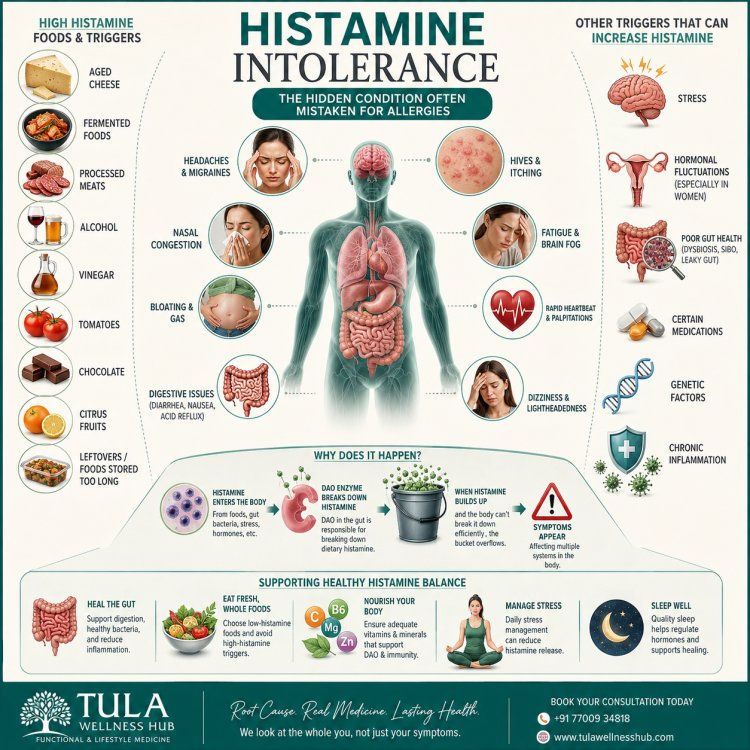
The Histamine Bucket Theory
One of the easiest ways to understand histamine intolerance is to imagine a bucket.
Every day, histamine enters the bucket from multiple sources:
-
Foods
-
Gut bacteria
-
Stress
-
Hormonal fluctuations
-
Exercise
-
Environmental allergens
-
Certain medications
As long as the bucket remains below its limit, you feel fine.
But when it overflows...
Symptoms suddenly appear.
This is why histamine intolerance often feels unpredictable.
Many people say:
"I ate this food yesterday and felt completely fine, but today it made me sick."
The food may not have changed.
Your histamine bucket simply became too full.
Symptoms of Histamine Intolerance
Because histamine receptors are found throughout the body, symptoms can affect many different organs.
Skin Symptoms
-
Hives (urticaria)
-
Itching
-
Flushing
-
Eczema flare-ups
-
Facial redness
Digestive Symptoms
-
Bloating
-
Abdominal discomfort
-
Diarrhea
-
Acid reflux
-
Nausea
-
Gas
Respiratory Symptoms
-
Runny nose
-
Nasal congestion
-
Sneezing
-
Sinus pressure
Neurological Symptoms
-
Headaches
-
Migraines
-
Brain fog
-
Fatigue
-
Dizziness
Cardiovascular Symptoms
-
Rapid heartbeat
-
Palpitations
-
Blood pressure fluctuations
Because these symptoms overlap with allergies, IBS, migraines, anxiety, hormonal disorders, and even chronic fatigue, histamine intolerance is frequently missed.
What Causes Histamine Intolerance?
Histamine intolerance rarely has a single cause.
Instead, several factors often work together.
1. Reduced DAO Enzyme Activity
DAO is the body's main enzyme for breaking down dietary histamine.
DAO activity may decrease because of:
-
Genetics
-
Nutrient deficiencies
-
Certain medications
-
Gut inflammation
-
Alcohol
Lower DAO activity means histamine from food remains in the body for longer.
2. Poor Gut Health
Your gut plays a major role in histamine metabolism.
Conditions such as:
-
Dysbiosis
-
Small Intestinal Bacterial Overgrowth (SIBO)
-
Leaky Gut
-
Chronic intestinal inflammation
-
Inflammatory bowel disease
can all impair histamine breakdown.
Some bacteria actually produce histamine themselves, further increasing the body's total histamine load.
This is one reason why improving gut health is often central to managing histamine intolerance.
3. Chronic Stress
Stress affects far more than your mental wellbeing.
Chronic stress can:
-
Activate mast cells
-
Increase histamine release
-
Disrupt gut function
-
Increase inflammation
-
Reduce digestive efficiency
Many people notice their symptoms worsen during periods of emotional stress, even without changing their diet.
4. Hormonal Changes
Histamine and hormones have a fascinating two-way relationship.
Research suggests that estrogen may increase histamine release, while histamine itself may stimulate estrogen activity.
This creates a cycle where hormonal fluctuations can worsen symptoms.
Many women notice increased:
-
Hives
-
Headaches
-
Bloating
-
Nasal congestion
-
Skin flare-ups
-
Migraines
during the days leading up to menstruation.
This hormonal connection is one reason why histamine intolerance is more commonly recognized in women.
Foods That May Increase Histamine
Some foods naturally contain high levels of histamine.
These include:
-
Aged cheeses
-
Fermented foods
-
Vinegar
-
Alcohol
-
Processed meats
-
Smoked meats
-
Smoked fish
-
Canned fish
-
Leftovers stored for long periods
Other foods may not contain high histamine themselves but can stimulate histamine release in susceptible individuals.
Examples include:
-
Tomatoes
-
Citrus fruits
-
Chocolate
-
Strawberries
It's important to remember that not everyone reacts to the same foods.
This is why individualized assessment is far more valuable than following long lists found on the internet.
Can Histamine Intolerance Be Diagnosed?
There is currently no single test that definitively diagnoses histamine intolerance.
Healthcare professionals usually consider:
-
Your symptom pattern
-
Dietary history
-
Response to dietary changes
-
Gut health evaluation
-
Medication review
-
Other conditions that may mimic histamine intolerance
Since many symptoms overlap with allergies, IBS, migraine disorders, hormonal conditions, and mast cell disorders, it is important to rule out other possible causes before concluding that histamine intolerance is responsible.
Supporting Healthy Histamine Balance Naturally
The encouraging news is that histamine intolerance often responds well to a comprehensive lifestyle approach. Rather than simply eliminating foods indefinitely, the goal should be to identify why histamine is accumulating and support the body's natural ability to process it.
1. Heal the Gut
Your digestive system is central to histamine metabolism.
An unhealthy gut can reduce DAO enzyme activity, increase intestinal permeability ("leaky gut"), and encourage the growth of bacteria that produce histamine.
Improving gut health may involve:
- Eating a nutrient-dense, whole-food diet
- Addressing constipation and sluggish digestion
- Identifying food intolerances
- Supporting a healthy gut microbiome
- Managing conditions such as SIBO or dysbiosis when present
Rather than viewing histamine intolerance as simply a food problem, it is often more helpful to see it as a sign that the digestive system needs attention.
2. Reduce Your Histamine Load
Every individual has a different "histamine bucket."
During periods when symptoms are severe, temporarily reducing high-histamine foods may help decrease the overall histamine burden while addressing the underlying causes.
Some practical strategies include:
- Preparing meals fresh whenever possible
- Avoiding leftovers that have been stored for several days
- Limiting processed and fermented foods if they trigger symptoms
- Reading food labels carefully
- Keeping a food and symptom diary to identify personal patterns
It's important to remember that dietary triggers vary from person to person. Foods that trigger symptoms in one individual may be well tolerated by another.
For this reason, dietary changes should be individualized rather than overly restrictive.
3. Support Your Nutritional Status
Several nutrients play important roles in histamine metabolism and immune function.
These include:
- Vitamin C
- Vitamin B6
- Magnesium
- Copper
A balanced diet rich in vegetables, fruits, quality protein, nuts, seeds, and healthy fats generally provides many of these nutrients.
Supplementation should only be considered after discussing your individual needs with a qualified healthcare professional.
4. Manage Chronic Stress
Stress and histamine have a close relationship.
When the body experiences ongoing stress, mast cells become more active, increasing histamine release and inflammation.
Simple daily habits can help regulate the nervous system, including:
- Deep breathing exercises
- Meditation
- Yoga
- Prayer or mindfulness practices
- Walking in nature
- Spending time with supportive family and friends
Reducing stress doesn't just improve emotional wellbeing—it may also help reduce your overall histamine burden.
5. Prioritize Quality Sleep
Sleep is when the body repairs tissues, regulates hormones, and restores immune balance.
Poor sleep may increase inflammation, worsen stress hormone levels, and indirectly affect histamine regulation.
Aim for:
- A consistent bedtime
- Seven to nine hours of sleep each night
- Limited screen exposure before bed
- A cool, dark sleeping environment
Small improvements in sleep quality can often make a noticeable difference in overall symptoms.
Emerging Supportive Therapies
Lifestyle changes remain the foundation of managing histamine intolerance. However, some complementary therapies may support recovery as part of a comprehensive wellness plan.
Hyperbaric Oxygen Therapy (HBOT)
HBOT increases the amount of oxygen delivered to body tissues by allowing individuals to breathe oxygen in a pressurized environment.
Enhanced oxygen availability may support tissue repair, cellular function, and recovery from chronic inflammation. While HBOT is not a treatment for histamine intolerance itself, improving overall physiological resilience may benefit some individuals as part of a broader treatment strategy.
Infrared Sauna Therapy
Infrared sauna promotes gentle heating of tissues and encourages circulation and relaxation.
Many people find that regular sauna sessions help reduce stress, improve recovery, and promote an overall sense of wellbeing.
Because stress is an important contributor to histamine release, relaxation-based therapies may indirectly support symptom management.
Red Light Therapy
Red Light Therapy supports mitochondrial function—the process by which cells produce energy.
Emerging research suggests that Red Light Therapy may help support tissue recovery, reduce oxidative stress, and promote cellular health.
Although more research is needed specifically for histamine intolerance, optimizing cellular function may contribute to improved recovery and overall wellness.
Ozone Therapy
Ozone therapy is used in some integrative healthcare settings to support immune regulation and physiological balance.
When administered by appropriately trained practitioners, it may be considered as one component of a personalized wellness plan focused on reducing inflammatory burden and supporting overall health.
These therapies should always complement—not replace—the foundations of good nutrition, healthy lifestyle habits, stress management, and proper medical evaluation.
Dr. Priya's Insight
One of the most rewarding parts of Functional Medicine is helping patients connect symptoms that previously seemed unrelated.
Someone may come to the clinic because of migraines. Another because of bloating. Someone else because of eczema or chronic sinus congestion.
At first glance, these conditions appear completely different.
However, when we step back and look at the whole person, we often find common threads involving gut health, inflammation, stress, nutrition, hormones, and immune regulation.
Histamine intolerance is one example of how the body functions as an interconnected system.
At Tula Wellness Hub, we believe that lasting health comes from understanding why symptoms occur rather than simply suppressing them. By identifying root causes and supporting the body's natural healing processes, many people experience improvements that extend far beyond a single symptom.
Frequently Asked Questions
Is histamine intolerance permanent?
Not always. In many individuals, symptoms improve once underlying contributors such as gut inflammation, dysbiosis, nutrient deficiencies, or chronic stress are addressed.
Should everyone follow a low-histamine diet?
No. Restricting foods unnecessarily may lead to nutritional deficiencies and make eating more difficult. Dietary changes should be individualized and ideally guided by a healthcare professional.
Can histamine intolerance cause anxiety?
Histamine acts as a neurotransmitter in the brain. Some individuals report symptoms such as anxiety, restlessness, poor sleep, or brain fog when histamine levels are elevated, although these symptoms can have many possible causes.
Why do symptoms seem to come and go?
Histamine accumulates from multiple sources throughout the day. Symptoms often appear only when the body's overall histamine load exceeds its ability to break it down.
Can improving gut health help?
For many individuals, supporting gut health is one of the most important aspects of managing histamine intolerance because the digestive system plays a central role in histamine metabolism.
Key Takeaways
- Histamine intolerance is different from a true allergy.
- Symptoms occur when histamine builds up faster than the body can eliminate it.
- Common symptoms include headaches, hives, bloating, nasal congestion, fatigue, digestive discomfort, and skin flare-ups.
- Gut health, stress, hormonal changes, medications, and nutrient deficiencies can all contribute.
- Fresh, whole foods, healthy sleep, stress management, movement, and personalized nutrition are often more effective long-term strategies than simply avoiding foods forever.
- Understanding the root cause can help create a more sustainable path toward better health.
If you've been struggling with recurring headaches, hives, bloating, digestive discomfort, nasal congestion, fatigue, or symptoms that don't fit neatly into one diagnosis, histamine intolerance may be worth exploring.
At Tula Wellness Hub, we take a root-cause approach to health by evaluating gut function, nutrition, lifestyle, stress, inflammation, and hormonal balance. Rather than treating symptoms in isolation, we work to understand how different systems in the body interact to influence your health.
If you're ready to uncover the root causes of your symptoms and create a personalized plan for long-term wellness, we'd be happy to help.
Book your Functional Medicine consultation today and begin your journey toward better health—naturally.








Dr. Priya Vasudevan M.D, AB. Dip ABLM