


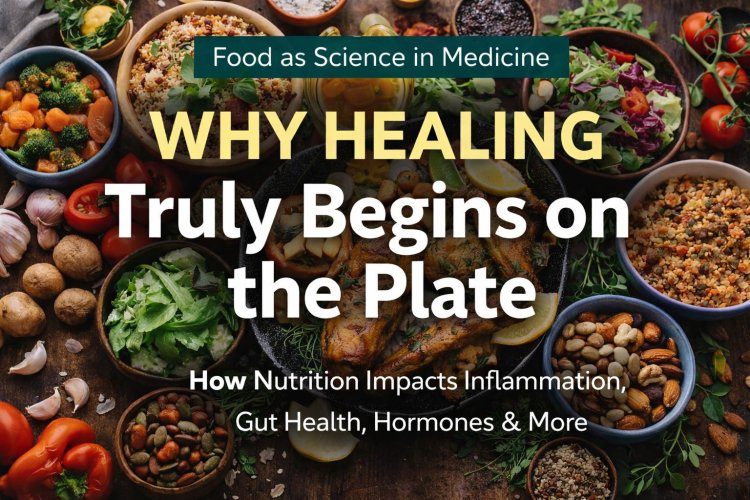
For decades, modern medicine has treated food as an afterthought—something briefly mentioned at the end of a consultation, often reduced to generic advice like “eat healthy” or “avoid sugar.” Prescriptions, procedures, and protocols have dominated healthcare, while nutrition remained on the sidelines.
But science is finally catching up with what traditional healing systems have always known.
Food is not supportive care.
Food is primary care.
Every single meal we eat influences our biochemistry, gene expression, immune signaling, hormones, gut microbiome, and even mitochondrial energy production. Food is not just fuel—it is information. And the body is constantly listening.
Healing, therefore, does not begin in the pharmacy.
It begins on the plate.
Food Is Molecular Communication—Not Just Nutrition
Conventional nutrition often reduces food to numbers:
-
Calories in versus calories out
-
Grams of protein, carbohydrates, and fat
-
Recommended daily allowances of vitamins and minerals
While these metrics have value, they fail to capture food’s true biological impact.
Whole foods contain thousands of bioactive compounds, including:
-
Polyphenols that influence inflammation and gut microbial diversity
-
Phytonutrients that regulate oxidative stress and detoxification
-
Fatty acids that shape cell membranes and hormone signaling
-
Amino acids that serve as neurotransmitter precursors
-
Fibers that act as metabolic signals for gut bacteria
Food communicates directly with:
-
The immune system – activating or calming it
-
The gut microbiome – diversifying or disrupting it
-
The endocrine system – balancing or dysregulating hormones
-
The nervous system – soothing or overstimulating
-
The mitochondria – energizing or exhausting cells
This is why two people can eat the same meal and experience completely different outcomes.
Chronic Disease: A Story of Persistent Inflammation
On the surface, many chronic conditions appear unrelated:
-
Type 2 diabetes
-
Cardiovascular disease
-
Autoimmune disorders
-
Infertility and PCOS
-
IBS and chronic gut issues
-
Chronic fatigue and mood disorders
Yet when we look deeper, a common thread emerges again and again:
Chronic, low-grade inflammation.
Inflammation itself is not the enemy—it is essential for healing. The problem arises when inflammatory pathways remain chronically activated due to ongoing triggers, many of which are dietary.
Food can either:
-
Promote inflammation through refined sugars, ultra-processed foods, industrial seed oils, additives, and poor-quality fats
-
Resolve inflammation through omega-3 fatty acids, antioxidants, polyphenol-rich plants, spices, fermented foods, and adequate protein
This is not philosophical—it is measurable. We see it reflected in:
-
Elevated hs-CRP and inflammatory markers
-
Insulin resistance and metabolic dysfunction
-
Oxidized LDL and abnormal lipid particles
-
Autoimmune antibody titers
-
Markers of gut permeability
Each meal either adds to the inflammatory burden—or reduces it.
The Gut: Where Food Becomes Medicine—or a Trigger
The gut is far more than a digestive tube. It is:
-
Home to over 70% of the immune system
-
A major site of hormone and neurotransmitter production
-
A regulator of systemic inflammation
-
A critical interface between the external world and internal biology
When food quality is poor, several things can occur:
-
Disruption of the gut microbiome
-
Damage to the intestinal lining
-
Increased intestinal permeability (“leaky gut”)
-
Immune activation against food particles
-
Systemic inflammation
These changes may manifest far beyond the gut as:
-
Joint pain
-
Skin conditions
-
Autoimmune flares
-
Anxiety and depression
-
Brain fog and chronic fatigue
Conversely, when food is intentional, therapeutic, and individualized, the gut becomes a gateway to healing.
This is why functional and integrative medicine does not prescribe a “one-diet-fits-all” approach. Food is used strategically—sometimes to calm inflammation, sometimes to repair the gut barrier, sometimes to rebalance microbes, and sometimes to rebuild resilience.
Hormonal Health: Food as Endocrine Intelligence
Hormones are exquisitely sensitive messengers. They respond not only to age and genetics, but to daily dietary signals.
Blood sugar instability alone can disrupt:
-
Insulin and metabolic health
-
Cortisol rhythms
-
Thyroid hormone conversion
-
Estrogen and progesterone balance
-
Testosterone levels
Chronic under-eating, fear of healthy fats, inadequate protein, or erratic meal timing can quietly sabotage hormonal harmony—even in individuals who believe they “eat clean.”
Food acts as endocrine input:
-
Protein supplies amino acids for hormone synthesis
-
Fats provide cholesterol—the backbone of steroid hormones
-
Micronutrients like zinc, selenium, iodine, and magnesium act as enzymatic cofactors
-
Fiber supports estrogen detoxification and gut-hormone balance
When food aligns with physiology, hormones often recalibrate naturally—sometimes reducing the need for long-term medication.
Mitochondria: The Missing Link in Most Diet Conversations
At the cellular level, health is energy.
Mitochondria—the energy producers of our cells—are profoundly influenced by dietary inputs. When mitochondrial signaling is impaired, symptoms emerge:
-
Chronic fatigue
-
Poor exercise tolerance
-
Brain fog
-
Slow healing
-
Mood disturbances
Mitochondria thrive on:
-
Nutrient-dense foods
-
Antioxidant support
-
Stable blood sugar
-
Adequate oxygen and micronutrients
Ultra-processed foods disrupt mitochondrial communication. Whole, seasonal, nutrient-dense foods restore it.
This is why patients often experience dramatic improvements in energy, sleep, clarity, and resilience—not because calories changed, but because cellular efficiency improved.
Precision Nutrition: Why Context Matters More Than Trends
One of the most damaging narratives in modern nutrition is the idea of universal diets.
The truth is:
-
A vegetarian diet may heal one person and worsen another
-
Intermittent fasting may restore metabolic health in some but trigger burnout in others
-
Dairy may be nourishing for one gut and inflammatory for another
-
Even “superfoods” can be inappropriate in certain clinical states
Food as science demands context. We must ask:
-
What is this person’s metabolic state?
-
What does their gut microbiome look like?
-
What is their inflammatory load?
-
What phase of life are they in—fertility, menopause, aging?
-
What is their stress and sleep physiology?
Only then does food become medicine rather than another stressor.
Why Medicine Must Reclaim Food as a Core Tool
Food should never be an afterthought in healthcare. It deserves the same rigor as:
-
Diagnostic testing
-
Pharmacology
-
Imaging
-
Procedures
When used correctly, food:
-
Prevents disease progression
-
Reverses early pathology
-
Reduces medication burden
-
Improves long-term outcomes
-
Empowers patients to participate in their healing
This is not alternative medicine.
This is systems-based, root-cause medicine.
Dr. Priya’s Insight
Over years of practicing medicine across different healthcare systems, one pattern has remained consistent:
The body is not broken—it is responding.
Food is one of the most frequent signals we send the body. Three times a day, every day, we are either reinforcing imbalance or restoring harmony.
When patients stop asking, “What diet should I follow?” and begin asking, “What does my body need right now?” healing accelerates.
Food stops being confusing.
It becomes intentional.
It becomes intelligent.
It becomes medicine.
Gentle Call to Action
If you’re looking to understand what your body needs right now—from gut health and hormonal balance to metabolic and mitochondrial healing—our integrative, personalized programs at Tula Wellness Hub are designed to support you at the root cause level.
Coimbatore
+91 70300 70400
www.tulahealth.in








Dr. Priya Vasudevan M.D, AB. Dip ABLM